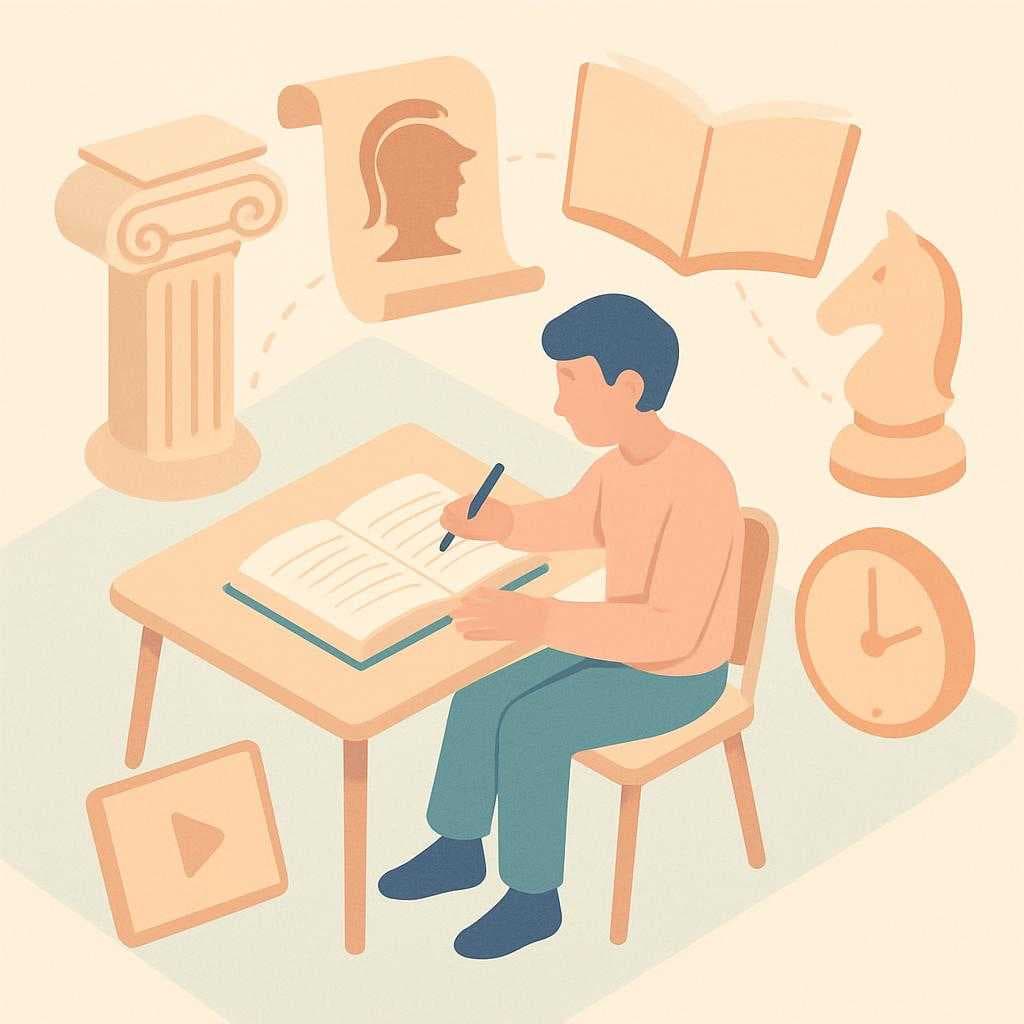
Acing Your GCSE History Exam: The Art of Storytelling
Summary: Discover how storytelling can transform your GCSE History revision. Learn how to weave narratives into your study habits to enhance retention and engage with the past effectively. This guide delves into strategies aligned with AQA, Edexcel, and OCR exam boards to help you succeed.
Studying history at the GCSE level often feels like an overwhelming task. With dates, events, and figures to remember, it’s easy to get lost in the details. But what if there was a way to make history more engaging and memorable? Enter storytelling—a technique that can turn seemingly dry facts into captivating narratives.
The Power of Storytelling in History
Storytelling is an age-old method of passing down knowledge and culture. When applied to history revision, it can help students create connections between events and understand historical contexts better. By crafting stories around historical events, you can enhance your memory and make learning more enjoyable.
Tailoring Your Stories to Exam Boards
Each exam board—AQA, Edexcel, and OCR—has its unique specifications and focus areas. Understanding these can help tailor your storytelling approach:
-
AQA: Known for its thematic studies, AQA encourages understanding the broader context. Create stories that connect different themes over time, such as how revolutions have shaped societies.
-
Edexcel: This board often emphasizes depth studies. Dive deep into a specific period or event, narrating the intricate details and personal stories of key figures involved.
-
OCR: With a focus on both thematic and depth studies, OCR allows you to blend approaches. Use storytelling to weave thematic narratives and delve into detailed studies of certain eras.
Crafting Your Historical Narrative
-
Start with a Framework: Choose a historical event or period. Outline the main events, key players, and important outcomes. This framework will serve as the backbone of your story.
-
Add Personalities: Humanize your narrative by focusing on historical figures. What were their motivations? How did their actions impact the outcome? Bringing characters to life helps make history relatable.
-
Contextualize Events: Place events within the larger historical context. Understanding the "why" behind events can often be more important than the "when."
-
Practice Active Revision: Revisit your stories regularly. Discuss them with peers, and consider how they fit into the broader historical narrative outlined by your exam board.
Final Thoughts
By integrating storytelling into your study routine, you can transform your understanding of history from a list of facts to a series of interconnected stories. This approach not only boosts your retention but also prepares you to tackle the varied demands of AQA, Edexcel, and OCR exams.
Remember, history is not just about the past. It's a story waiting to be told, and with these strategies, you can tell it with clarity and confidence in your GCSE exams.